


Onychomycosis is a lesion that, in an advanced stage, affects the functioning of internal organs and systems.You can treat the pathology in time by knowing the signs of toenail fungus.How does the disease appear depending on the stage?What types of mushrooms are there?Let's take a closer look.
How to recognize toenail fungus
The cunning of mushrooms is that in the initial stage there are no symptoms.Small lines and dots are visible on the surface of the nail.They are usually not visible.
The following symptoms may appear:
- burning;
- itching;
- inflammation;
- peeling;
- obesity.
If not treated, the signs of nail fungus are manifested by the turbidity of the surface, the uncharacteristic color of the plate and its modification.
Toenail fungus in an advanced stage leads to brittleness and melting of the surface.In some cases, the plaque leaves the bed.It is important to start the treatment therapy at the right time, as the fungus spreads quickly and leads to damage to the skin of the feet.
When the first symptoms appear, it is recommended to visit a doctor.
How are the different types of onychomycosis manifested?
Depending on the type of onychomycosis, the following symptoms of nail fungus are distinguished:
- Normotrophic onychomycosis.It manifests itself as a change in color - from white to black, depending on the stage of the lesion.At the same time, the thickness remains the same and does not become cloudy.
- Hypertrophic.The tile loses its natural shine and the plate changes color.Thickening and deformations are observed, up to destruction.
- Atrophic.The plaque changes color and becomes very thin.It becomes quite fragile.Rejection of the affected area occurs.
You can only determine the presence of mushrooms.The type of pathogen can be determined only after microscopic and bacteriological analysis of the scraping.
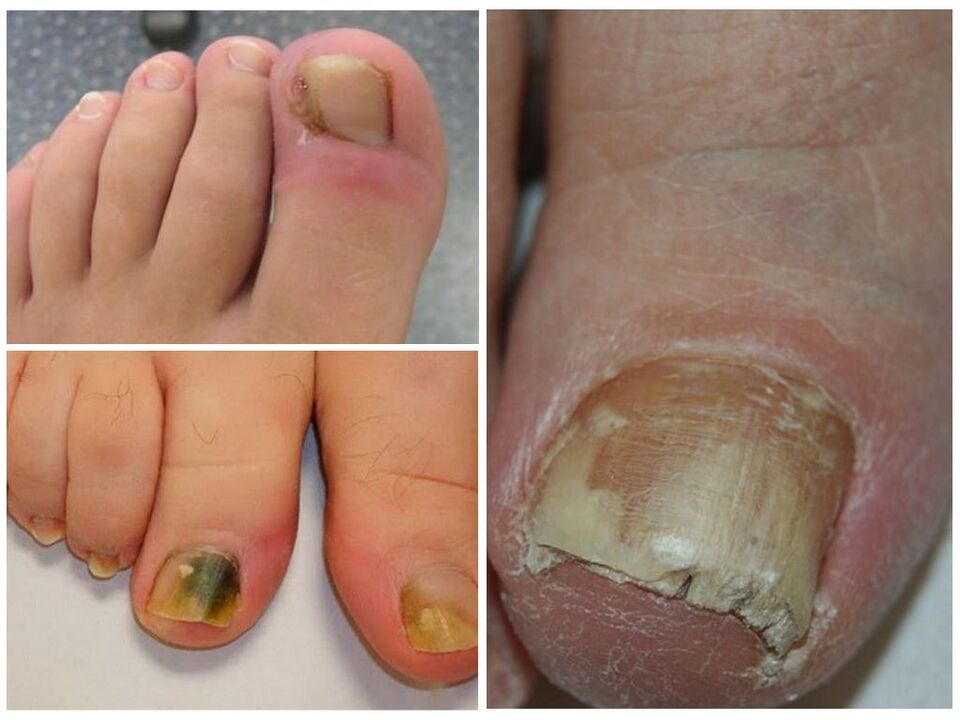
Signs of fungi based on the causative agent of the disease
The effectiveness of the treatment of fungi depends on the correct diagnosis, which allows the identification of the pathogen.
Nail fungus can be caused by different microorganisms.Remedies for fungi are selected depending on the sensitivity of the pathogenic spores.
Yeast microorganisms
Yeast microorganisms are invisible for a long period of time.They manifest as roughness of the nail plate, as well as itching of the surrounding skin.Occurs in 5% of infection cases.
Dermatophytes
This type of pathogen is the most common.The first signs of nail fungus depend on the type of dermatophyte:
- Lesion extending to the feet and nails.
- Touch only the thumb or little finger.It lies in the interdigital folds.
- The lesion also affects the thumb and little finger, but does not extend to the skin.Symptoms appear as changes in the nails.
Moldings
This fungal infection develops in very rare cases.Fungus on the feet is mainly seen in people with HIV infection.
Fungal therapy can include both drug treatment and the use of folk remedies.
Other symptoms of fungal infection
First symptoms and treatment are related to each other.For example, mold does not appear in any way in the initial stage.If you look closely, you can see faint spots and dimples.As the disease progresses, the color of the nail plate may change.The infection spreads and leads to the partial destruction of the plaque and its removal from the bed.
The following signs are also observed:
- The affected nail plate becomes very brittle.When shortened, the nail begins to break on its own.
- The development of a fungal infection leads to a change in the structure and shape of the plaque.
- Black color of the nail plate.
- Rooted nail.
- Worsening of the general condition and dysbacteriosis.
- Nail damage leads to cracking and burning of the skin.
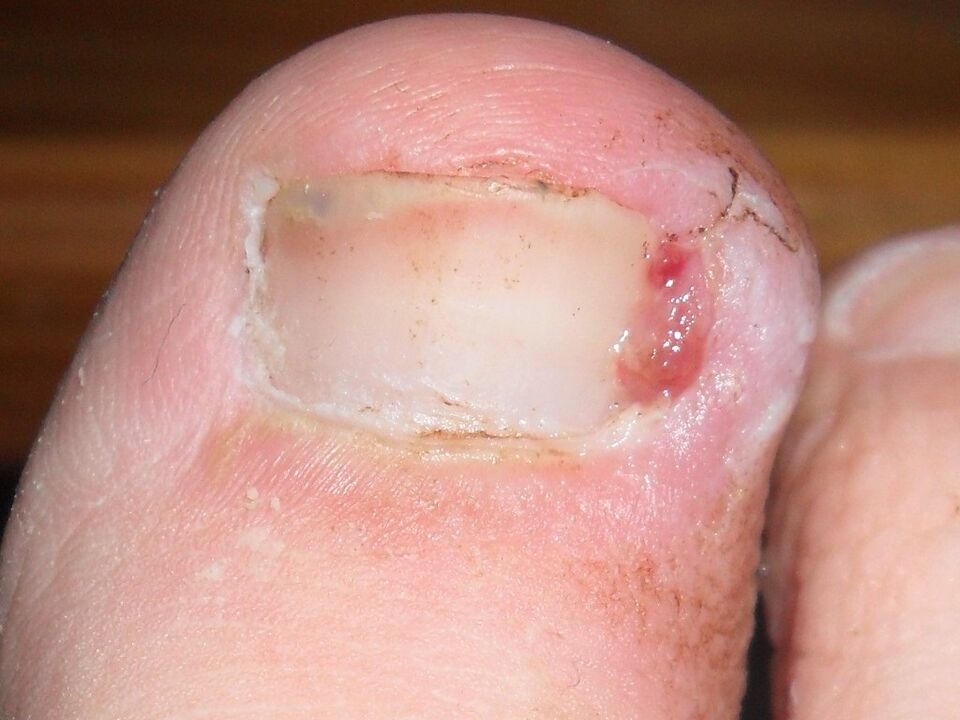
Which doctor should I contact?
Any change in the plate should alert you.The first thing you should do is consult a doctor.A specialist who treats fungal infections is a dermatologist.
During contact with it, samples of the skin and the keratinized part are taken for examination.After receiving the results, drug therapy is prescribed.
Methods for the treatment of onychomycosis
Today, the pharmacological market is overflowing with various drugs that have general and local effects.When choosing treatment, the stage of onychomycosis is taken into account.
Medicines have a harmful effect on fungal spores and also accumulate in tissues, thus reducing the duration of treatment.
At the initial stage, varnishes are effective against nail fungus.
Applying a layer of colored varnish over the medicated varnish will help improve the aesthetic appearance.
In an advanced stage of onychomycosis, it is necessary to take drugs in tablets - antimycotics.The products have some contraindications and side effects, this should be taken into account.
Topical ointments and creams are widely used.
If the treatment was systematic, then after some time the signs of the fungus disappear and the affected areas are replaced by new tissue.
Important:it is necessary to confirm the absence of fungi using laboratory methods.A negative result means that the fungus is cured.
Nail removal
You can remove a part of the nail easily and painlessly using a special preparation.Its use can also replace surgery.The product is created based on essential oils that have antiseptic and antifungal properties.
Instructions for use:
- Steam your nails using a baking soda bath.
- Dry with a towel.
- Cover the area around the nail with a medical plaster.
- Apply the medicine in a thick layer.
- Wrap everything up and secure with duct tape.
- Drug exposure time is 3 days.
- After the expiration date, remove the patch and steam your nails.
- Using a nail polish remover, scrape off the softened stratum corneum.
The procedure is carried out until the damaged nail is completely removed.
Treatment with traditional methods
In the initial stage of the disease, folk remedies are very effective.The most common drugs for the treatment of onychomycosis:
- Honey Lubricate the affected dishes with honey or use a compress.Do the procedure every day.
- Soda.Dissolve 1 tablespoon in 1 liter of warm water.spoon of soda.Lower your hands and hold for 15-20 minutes.
- Onion or garlic juice.Prepare vegetable puree.Rub the product on pre-boiled fingers before going to bed.
- Apply the iodine solution twice a day.
- Chamomile baths have antiseptic properties.
- Salt and laundry soap.Steam the limbs, lather them thickly with soap and sprinkle with salt.Leave it for 30 minutes.If burning or itching occurs, rinse immediately with water.
conclusions
The appearance of fungi can be prevented by applying a number of preventive measures.They consist of observing basic hygiene rules, wearing shoes and socks made from natural ingredients and reducing contact with handrails in public places.
Be healthy!